The Perfect Pen, Part 2 (3 or 4?)

Many moons ago, I wrote about my rabid quest to find the perfect pen. Not a surprising thing for a writer who grew up from a kid who luxuriated in books, notepads, and all things literary and written. Would you believe I still have 6 books from my 6th grade Scholastic Books summer reading list? I remember my anticipation of the arrival of my order, and how I would immediately set about smelling the pages to determine which book I would read first.

Yes, I still smell books, and am drawn to the thicker and smellier ones! And I write every day in my journal, and read, usually 2 or three books at a time. I have a house full of books (a bitch to dust), some of which I even use as side tables in my living room.

Back to pens. The quest has ended! Can you believe it?

First, about the future of pens. It is numbered. And this I lament for all the kids who will never have the luxury of feeling a pen on paper, smelling its ink, and trying to always improve their handwriting. (Handwriting? What’s that you say?) The world of AI and smart devices is, and probably mostly has, replaced the writing tools I grew up with. I feel truly sorry for them.

For me? Pens will never go away. Nor will my notepads or my paper books (Red faced and truth be told, I do succumb to reading on my Kindle when I’m on my elliptical machine).
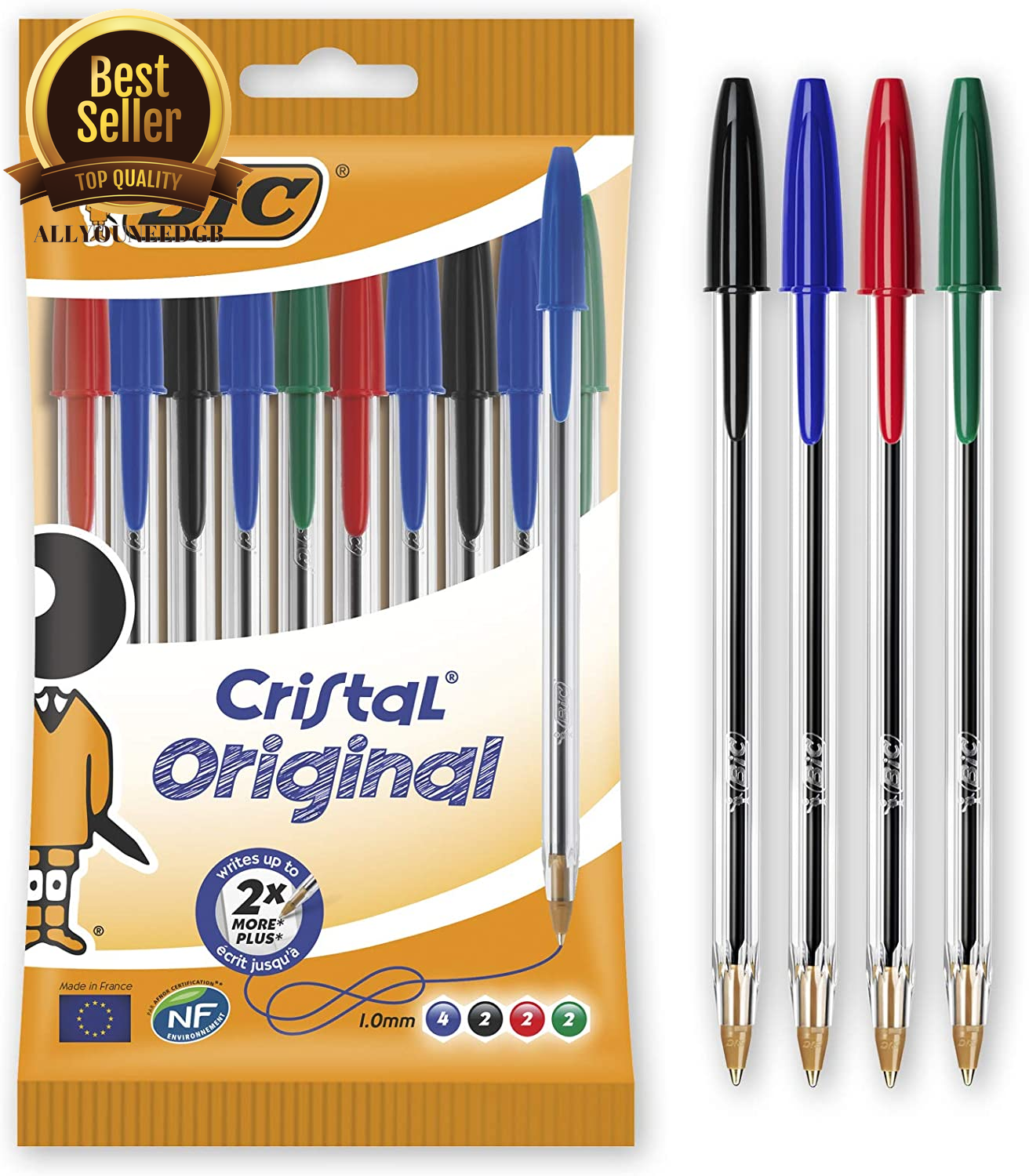
And now, I feel like I need a drum-roll here: After years of searching, and buying fountain pens, gel pens, roller balls, markers, and even pencils, I have come back to the pen that gave me thrills and comfort when I was a grammar school kid: The BIC Crystal stick pen! How ironic is that?

Diane Schuler: More

The story of Diane Schuler and her murder of 8 people while driving under the influence of alcohol and pot continues to haunt many of us. I regularly get comments about the earlier posts I’ve written about it.

So, today, I scanned the internet to see if there were any recent articles.

Here is what I found:

Diane Schuler’s Fatal Crash On The Taconic State Parkway

There’s Something Wrong with Aunt Diane

Positive Negative Impact

Tragedy on the Taconic: Diane Schuler

The Sad Story of a Little Dog at the Hands of Stupid Humans

Warning – a sad story follows with some vehement commentary about it.

I volunteer for my city’s animal shelter, and specifically, I walk dogs. I only do this once a week, but I also do other miscellaneous things as well. Not that any of this matters, but what does matter is what follows.

Mabel was an adorable, young-ish mixed breed dog who quickly became a favorite among volunteers and staff. She was friendly, fun, and always happy to go out on her twice-daily walks. Because of her joyous and delightful personality,  Mabel was quickly adopted. Mabel was then quickly returned.

Here’s the story.

Mabel went to live with her new owner who had a roommate. One day the roommate took Mabel out for a walk. During the course of the walk, Mabel bit someone. This was not Mabel’s fault, it was the fault of the stupid humans who were supposed to be taking care of her.

Mabel needed a serious decompression period. She needed to adjust to her new home and humans. She needed to be protected until it was clear how she would react to people, places, things, and kids. No one knows the details of Mabel’s story, but we do know she is back, and her future does not look bright.

I am crying as I write this. There is a good chance Mabel will be euthanized between now and my next visit to the shelter.

Sorry kind readers, but I am not a fan of great portions of the human race, and Mabel is just one example why.

Poop on Plastic!

You know those little plastic things you have to pull off of milk and other cartons to open them? Everytime I pull off one of those things, I get angry thinking of all the harm just that little piece of plastic can potentially do to both domestic pets and wildlife.

And then there are the myriad other plastic hazards that are part of our everyday life! I feel guilty that I do not stop using the products that present danger, but the issue is, they are everywhere! I know I cannot directly affect the huge piles of plastic-based garbage that suffocate our oceans, but I can do something about the plastic hazards that threaten my dogs.

Following are a number of hazards that arise from the use of plastic and plastic packaging.

Choking

Everytime I pull off one of those small plastic pieces on cartons of milk or juice, I think about the potential danger should one of my dogs get ahold of it.

Intestinal Blockage

An intestinal blockage is serious and can be fatal if not treated quickly. I once had a pug who ingested something that almost killed him. Fortunately, a good animal surgeon removed a pinecone from his intestines.

Chemicals

Plastic packaging often contains chemicals that can affect a pet’s hormones causing growth, development and reproductive health issues.

Entrapment

Imagine: you are out for the afternoon, and you have left your normally trustworthy dog alone in the house. You come home to find his nose had found its way into one of the holes in the plastic packaging used to hold 6-packs of your favorite beverage together. Although he is panting, both from having his breathing restricted and his anxiety of being trapped, it turns out that after lots of cuddles and a few treats, he is okay. You are lucky.

What Can You Do?

Short of forever refusing to purchase products packaged in plastic, here are a few more practical things you can do:

  • Look for products packaged from recyled materials or cardboard.
  • Use airtight containers to store foods.
  • Be mindful of how you dispose of plastic: cut up any packaging that can strangle or choke wildlife.
  • Be vigilant about the potential dangers of plastic packaging for your pets.

Grammar Maven Speaks

Okay, I will be the first to admit that I make a good number of grammar mistakes myself. However, that’s not to say that I don’t firmly believe that in this day of emoticons and abbreviations, we need to preserve this beautiful language of ours.

All through school, I was one of those nerdy kids who LOVED grammar! I loved learning the rules, and God knows there enough rules in grammar. I loved putting words together in proper context. I loved understanding the differences among past tense, past participle tense, past perfect tense, and so on. Would you believe there are 15 verb tenses in English?  This is an excellent academic resource for many grammar issues.

In teaching college writing classes for 25 years, it became disheartening to see the writing skills, or lack thereof, of so many students. The dilemma became how to teach writing and grammar without boring students to death because unless you are a nerd like me, grammar lessons can be deadly.

So, what is the answer?

The solution is not easy. What we do need is for respected and esteemed leaders in business and education to place powerful emphasis on the importance of good grammar and writing. This then means equipping them with excellent writing skills and the ability to recognize the same, or not, in students and subordinates.

Think for a moment. How do you rate your writing? What are your biggest writing challenges? How can you improve your writing?

I am taking the liberty of including a lesson I used in my classes in college, and I’d love to hear what you think!

Monsters in the Woods

My best friend and I recently went hiking in the woods that were in our childhood neighborhood. These woods were magical to us as kids. At Christmas time, the local minister and small chorus sang carols at the opening of the small forest. All the neighborhood families and their kids gathered around to join in the singing and wait for the grand finale — Santa Claus, who came booming out of the woods along with his elves and several big bags filled with presents. The presents were doled out to all the kids who reveled in the mystery that Santa Claus was indeed, real.

We also took our sleds through the woods to taunt one another to go down “suicide hill.” When my friend and I looked down it the other day, we actually got dizzy wondering how anyone could survive a run down the steepest, narrowest hill around. Caveat here, though, neither my friend nor I ever dared risk that run, which was mostly relegated to the boys.

Then there are the tanks. They still loom as monsters, but they no longer serve their original purpose, was to hold water as an overflow to the reservoir which provided water to most of the city of Rochester. Today they are merely a canvas for local artists.

The other day, my friend told me that some of our classmates used to swim in them on hot days. Looking at them today, I wonder how they got in and out, and how they didn’t encounter disaster. The thoughts give me chills.

Well, anyway, take a look at the picture. Look closely and you will see the miniscule human providing context to the size of the tanks.

Vignettes from a Fall Day in Ithaca

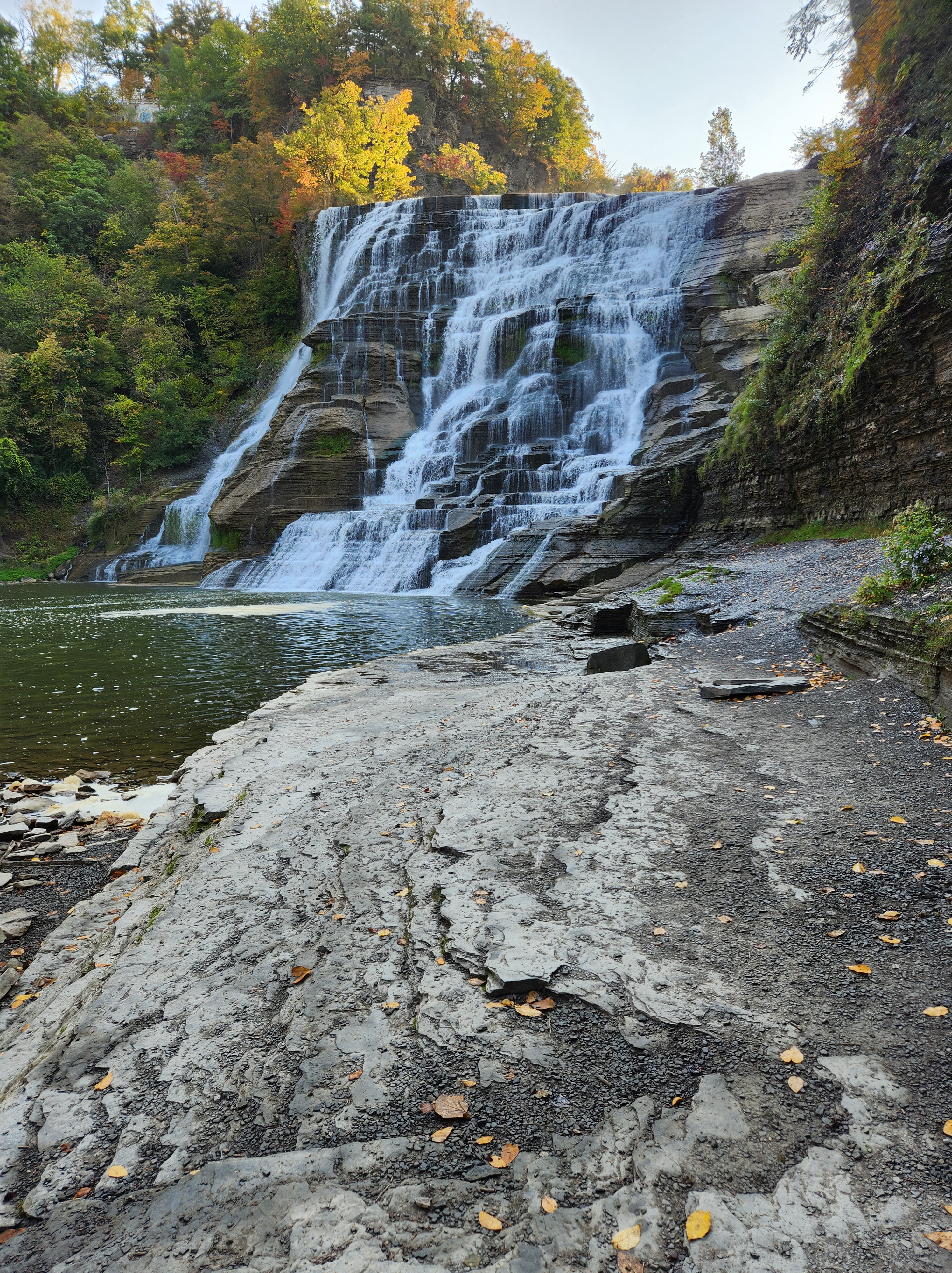
We recently spent a day in Ithaca, NY, while waiting for our little dog Rosie to have an endoscopy. We wondered what we were going to do for the 7 hours the procedure took, so we found ourselves imbibing in the seemingly endless places where nature and beauty abound.

Pictured below are some of those places.

Sleep, Dreams, and Lack of Linearity

Yep — it’s been a while, like all summer. It was one of those summers — tons of rain, few genuinely sunny days, and only one day that hit 90. Like I had to be a quick-change artist to catch the few pure sun rays while floating in my (small) backyard pool.

Anyway, I’m not here to write about my summer. I am here to write a short piece the catalyst of which was a dream I had last night and my frustration in not being able to make a story out of it.

Onward…

This morning I was trying to write down a dream I had last night, and I became frustrated because I could not retell it in a linear fashion. I couldn’t do this, because although I wanted it to be, it wasn’t linear!  I also couldn’t craft it as a logical story because it wasn’t! Logical, that is.

I don’t usually remember my dreams, but for some reason, I remembered this one in its vivid, Colorama glory. I remember feeling various feelings and emotions – primarily excitement, disappointment and worry.  It was a compilation of past places, people, and things along with a very real, present, and almost tangible feeling about those things.  

Consider this:

“Visual areas of the brain are much more active during dream states as are emotional centers. While linear logic and language areas are damped down. We’re not thinking in words as much. We’re thinking in images, simple narratives, and in intuitive, emotional ways.” Dr. Deirdre Barrett, author of The Committee of Sleep published in Discover Magazine

I have a very dear friend who has been studying her dream for many years. She keeps a dream journal by her bed and religiously writes down her dreams, even when she wakes up in the middle of the night. She gathers tons of life insights from her dreams. Since last night’s dream is having such an impact, maybe I should give her a call.

8 Ways to Use Artificial Intelligence

The news is rife with stories about artificial intelligence – some say it will save the world, while others say it will be the scourge of civilization. Whatever it will be, right now it can be used for many positive purposes, some of which are discussed below.

  1. Writing Tool: Whether a poet, blogger, journal or article writer, AI can help you get ideas and even help with the overall organization of a piece of writing.
  2. Language Learning: For those wanting to learn English, AI can help with wording, sentence structure, and overall feedback, providing users with an engaging, dynamic experience.
  3. Dungeon Master: I’m not at all versed in this game, but some of these D&D Dungeon Masters are using AI to create storylines and build worlds to improve the overall game experience.
  4. Coding Help: Believe it or not, programmers are using AI to debug and get help for coding problems. Here’s an example of human and AI collaboration.
  5. Novelist Nook: AI is a valuable tool for novelists and authors to help generate ideas, assist with organization, and come up with plot twists and engaging characters. In sum, this collaboration between writer and AI enhances creativity through conversation.
  6. Therapy Sessions: I’m not at all cool with this one, but through my research I found that AI is used by some people as a tool for talking about problems and issues, the idea being that the AI response is non-judgmental.
  7. Career Counselor: Yes, it’s true. AI can be used to help job-seekers practice for interviews. It can provide users with questions and evaluate their answers.
  8. Fine Arts Collaborator: Artists, musicians, and designers find AI useful for finding inspiration and discovering new ways of looking at things. 

There are lots of other creative ways people are using artificial intelligence, so for this curious, take a read here!

The Art of Writing(?)

Writing is perhaps the first human technology, a critical tool for gathering, recording, interpreting, and storing information.

It’s not “writing,” per se, in all the cases I’m about to note here. But I’ve compiled a basic evolution of how we humans put some kind of object to another kind of object to communicate one thing or another. Now with this very “clear” communication, the following is what I mean.

Paintings on Cave Walls

Vestiges of ancient cave paintings show pictures painted with stone, charcoal mixed with animal fat, and various other dyes from fruits and vegetables. These drawings don’t mean anything to us now, but they left a form of communication that was understood among their people.

Pictures on Clay Tablets

Early administrative functions were recorded with a sharp tool drawing pictures on soft clay. This method of recording information was developed in what was Mesopotamia, now Iraq.

Reed on Papyrus

Reed pens were used in the 4th century BC for writing on papyrus and continued to be used for many centuries after.

Feather Quill on Parchment

Moving up in the technical world of writing was the feather quill and ink used to write on parchment paper.

Chalk on Slate

The earliest writing tools for math and alphabets in schools were chalk used to write on slate.

Pen and Pencil to Paper

Most of us (not all) grew up using these tools to record thoughts, assignments, letters, and general communication.

Fingers on Keyboards

This is what I mean when I say not all above, because Millennials, and Generation Z folks were mostly brought up putting fingers on keyboards as their only writing tools.

Thumbs on Phone

It is inevitable that at some future time, evolution will step in with some modification of today’s physiology because of the prevalent use of thumbs on smart phones.

Humans and AI

Artificial intelligence is blasting off its launchpad with promises and threats about how we humans  will use it to further communication.

AI and Humans

Finally, there is the terrifying possibility that AI may one day control humans, and all the communication we may ever seek to do.